
Tin tức

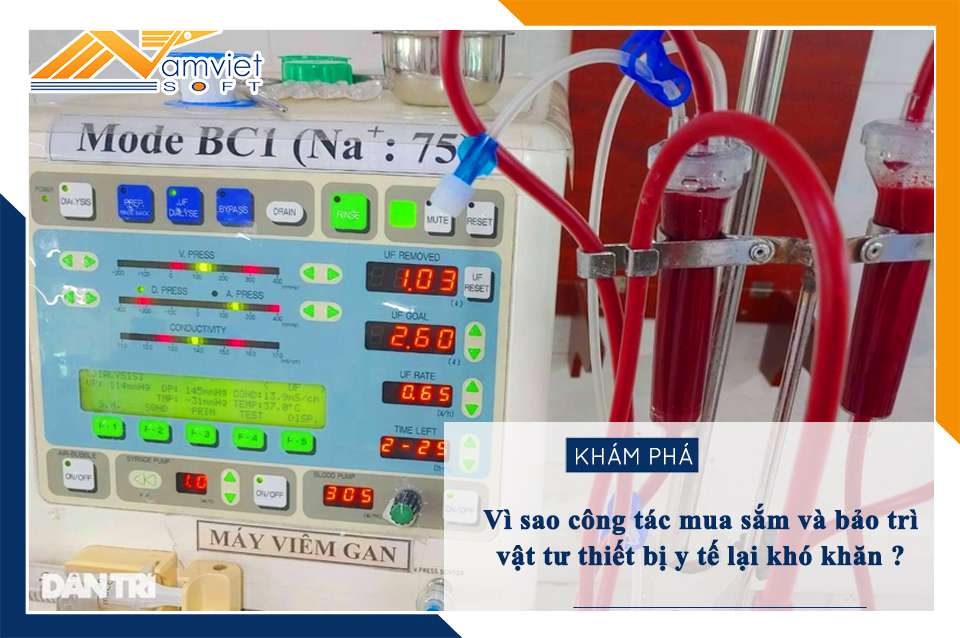
Vì sao công tác mua sắm và bảo trì vật tư thiết bị y tế lại khó khăn ?

Vì sao công tác mua sắm và bảo trì thiết bị y tế lại khó khăn ?

Hiện nay, nhiều trưởng phòng quản lý bảo trì vật tư, trang thiết bị y tế của nhiều bệnh viện ở TPHCM mang tâm trạng lo lắng, hoang mang với công việc “rất nhạy cảm” được giao. Trong Chương trình “Lắng nghe và trao đổi với nhân viên y tế” của Sở Y tế TPHCM …

Vì sao công tác mua sắm và bảo trì thiết bị y tế lại khó khăn ? Read More »
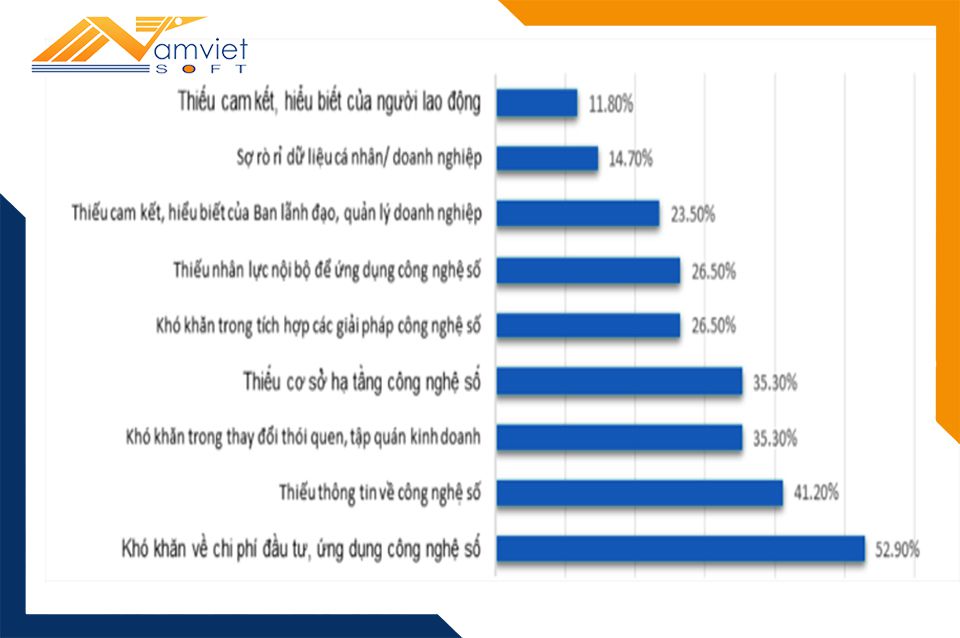
Rào cản trong chuyển đổi số của doanh nghiệp

Chi phí đầu tư, ứng dụng công nghệ còn cao, khó khăn trong thay đổi thói quen là những rào cản hàng đầu trong chuyển đổi số hiện nay.    Rào càn trong chuyển đổi số của doanh nghiệp. Ảnh: Cục Phát triển doanh nghiệp (Bộ Kế hoạch và Đầu tư).   Thông tin này …

Rào cản trong chuyển đổi số của doanh nghiệp Read More »

For those in high volume, low margin industries such as food and beverage or automotive parts manufacturing, preventative maintenance may be wrongly seen as unattainable, due to perceived high upfront costs. The digital universe is doubling in size every two years, growing from 4.4 trillion gigabytes in 2013 to 44 trillion in 2020. Enterprises have responsibility for around 85 per cent of the data held in this digital universe, according to the EMC Digital Universe with research and Analysis by IDC report. Manufacturing plants are just one type of enterprise contributing to this data production, by choosing to collect process data in order to monitor machinery status. Here, Claudia Jarret, US country manager at automation parts supplier EU Automation, explains how plant engineers can make the most of this data and ensure their maintenance schedule benefits their plant. Manufacturers, faced with the constant pressure to keep up with customer demand while remaining flexible, are acutely aware of the threat of plant downtime. Caused by a multitude of factors, including machine failure, downtime can cost manufacturers up to $260,000 per hour, according to research by analyst firm Aberdeen Research. Therefore, preventative maintenance, where equipment is maintained before it breaks, is essential, rather than reactive maintenance, which focuses on fixing equipment following a breakdown. But for those in high volume, low margin industries such as food and beverage or automotive parts manufacturing, preventative maintenance may be wrongly seen as unattainable, due to perceived high upfront costs. 1. Prevention The days of waiting for a system to fail due to overheating motors or leaking heat transfer systems for example, are thankfully behind us. Plant managers now plan regular inspections, upgrades and troubleshooting to avoid breakdowns. These simple steps are one way in which preventative maintenance can be carried out. But as Industry 4.0 technologies such as condition monitoring become more accessible, there are even smarter, more accurate and less time-consuming methods available. Many manufacturing plants now use predictive maintenance, a sophisticated form of preventative maintenance, to establish how well equipment is functioning and accurately predict failures before they occur. Not only does this reduce the risk of downtime-causing breakdowns, but it can also mean any necessary replacement parts can be ordered and are in stock in case of equipment failures. In addition, monitoring the health of equipment can allow for gradual tweaks, where a huge overhaul would previously have been required for improvements. Alterations can improve the efficiency of processes, ultimately reducing costs by eliminating inefficient elements and increasing equipment lifespan through maintenance or replacement of wearing parts. 2. Where to start The first step a plant manager should take when implementing any preventative maintenance schedule is to gather as much data as possible. Crucially, this should include an accurate estimate of the real cost of downtime to the particular plant in question. Collating data collected by smart sensors, sales figures and retrofitted systems should allow you to take into account loss of sales, wasted product and the cost of emergency repairs, which can provide a useful baseline figure. Using their experience of the plant, maintenance engineers should also be involved to produce an ideal plan for the plant, including areas they believe will require higher levels of maintenance, such as older equipment or machinery that is inherently prone to breakdowns such as motors, turbines, or other moving parts. This plan can then be used alongside the budget to produce a realistic maintenance plan, including what level of preventative maintenance can be employed. For some manufacturers, this will mean regular equipment checks, such as once a month for a section of plant, or daily for more volatile machinery. 3. Data If true predictive maintenance is chosen, data such as temperature, pressure and vibration is collected by sensors and will be continually integrated, stored, and analyzed. The next question for manufacturers is how to make the most of these valuable, but large, data sets. Once the data has been collected, the next step to make the most of its potential is to begin analysis. One popular option for data analysis is a cloud analytics service. Here, raw data is transmitted to the cloud, where it can both be stored and analyzed for trends that can predict an event including a breakdown. Many services also incorporate an alert system and warnings of impending breakdowns can be sent via a web portal, app, e-mail, or text message to relevant personnel. Other manufacturers, perhaps concerned about cybersecurity, the long-term stability of data stored in the cloud, or lag between data collection and analysis, will choose to undertake the analysis of raw data in-house. Although this is often significantly more resource-heavy, it does give plant managers complete control over their data. 4. Obsolescence Regardless of which system is implemented, predictive maintenance can be used to manage obsolescence, in addition to reducing downtime and improving process efficiency. This means parts can be ordered at the correct time to suit the maintenance schedule. Traditionally, manufacturers would have to keep a stock of parts that may need replacing, which take up valuable space on the plant floor that can instead be used for operations. Spare parts can also be bulky and produce a health and safety hazard, including trip or fire hazards, if stored on the plant floor. Instead, manufacturers can choose to order in replacement parts only when necessary, maximizing the space and resources they have available to them. With suppliers such as EU Automation able to ship obsolescent parts worldwide within 24 hours, there is now no need to store parts on site, or to suffer extended periods of downtime waiting for them to arrive. Preventative maintenance is essential for manufacturers to reduce downtime and the vast amounts of data now being produced by plants can be effectively used for predictive maintenance. When predictive maintenance is employed, the data collected can also be used for other purposes, such as increasing process efficiency and ensuring replacement parts are ordered in plenty of time. Therefore, proper collection and analysis of this data is essential to maximize its potential and this will only become more important each year as the quantity of data increases.

Improving Maintenance in Manufacturing

For those in high volume, low margin industries such as food and beverage or automotive parts manufacturing, preventative maintenance may be wrongly seen as unattainable, due to perceived high upfront costs. The digital universe is doubling in size every two years, growing from 4.4 trillion gigabytes in 2013 to 44 trillion in 2020. Enterprises have …

Improving Maintenance in Manufacturing Read More »

The smart move to more efficient and safer maintenance operations

Regardless of their size or the industry segment in which they operate, manufacturing companies are constantly striving to increase efficiencies within the various processes they employ. Arguably, maintenance is one of the primary areas in which companies are continually seeking ways to lower costs and cut the time taken to perform essential tasks. With many …

The smart move to more efficient and safer maintenance operations Read More »

ips For A Successful Preventative Maintenance Strategy

Tips For A Successful Preventative Maintenance Strategy

A successful preventative maintenance strategy involves much more than a couple of mechanics lubing your machinery moving parts on the production line. Preventative maintenance is a comprehensive and facility wide program that ensures that you’re protecting your investment dollars and supporting the bottom line of your facility, including ensuring the health and well-being of all …

Tips For A Successful Preventative Maintenance Strategy Read More »

Giá thầu bảo trì đường thủy thấp bất thường

Giá thầu bảo trì đường thủy thấp bất thường

Lãnh đạo một số đơn vị quản lý bảo trì đường thủy xác nhận năm nay nguồn thu từ dịch vụ này giảm mạnh khiến doanh nghiệp lâm vào cảnh khó khăn.   Các gói thầu bảo trì thường xuyên đường thủy quốc gia năm 2022 có giá trúng thầu thấp hơn 10% so với …

Giá thầu bảo trì đường thủy thấp bất thường Read More »

Lý do Sawaco luôn bảo dưỡng hệ thống đường ống nước

Lý do Sawaco luôn bảo dưỡng hệ thống đường ống nước

Tổng công ty Cấp nước Sài Gòn (Sawaco) cho biết việc bảo dưỡng đường ống nước là để duy trì điều kiện làm việc tốt nhất, cũng như đảm bảo chất lượng nguồn nước. Nhiều năm qua, Sawaco luôn chủ động bảo dưỡng, bảo trì đường ống nước trên địa bàn TP.HCM. Tuy nhiên, công …

Lý do Sawaco luôn bảo dưỡng hệ thống đường ống nước Read More »

Lĩnh vực bảo dưỡng, sửa chữa máy bay toàn cầu đối mặt thách thức mới

Phó Chủ tịch phụ trách dịch vụ hậu mãi tại Spirit AeroSystems, Kailash Krishnaswamy, cho biết thiếu lao động là tình trạng chung và cách duy nhất để thu hút lao động là tăng chi phí.   Lĩnh vực bảo dưỡng, sửa chữa và đại tu máy bay toàn cầu (MRO) đang đối mặt với …

Lĩnh vực bảo dưỡng, sửa chữa máy bay toàn cầu đối mặt thách thức mới Read More »

Thang máy dừng hoạt động do thủ tục bảo trì lằng nhằng

Thang máy dừng hoạt động do thủ tục bảo trì lằng nhằng

“Nguyên nhân do cơ chế, thủ tục lằng nhằng, phiền hà” – ông Phạm Hoàng Hải – Phó Giám đốc Xí nghiệp Quản lý và Phát triển nhà ở xã hội – cho biết trong cuộc trao đổi với phóng viên Báo Lao Động chiều 11.2 về vụ việc thang máy toà nhà CT1A (khu …

Thang máy dừng hoạt động do thủ tục bảo trì lằng nhằng Read More »

Hiệu quả áp dụng công nghệ bảo trì sửa chữa ‘điện nóng’

Hiệu quả áp dụng công nghệ bảo trì sửa chữa ‘điện nóng’

Việc áp dụng công nghệ bảo trì sửa chữa điện nóng mang lại nhiều lợi ích và hiệu quả thiết thực, thể hiện rõ cam kết liên tục nâng cao chất lượng phục  vụ khách hàng của Công ty Điện lực Nghệ An.    Nhằm tăng năng suất lao động, ngăn ngừa sự cố, giảm …

Hiệu quả áp dụng công nghệ bảo trì sửa chữa ‘điện nóng’ Read More »